

Drowning in half-finished notes? The best note taking apps are the ones that help you write ideas in your own words and review them later. Pair the app with a method that fits the task.
This guide is part of the site’s collection of productivity tools articles.
| Item | Value |
|---|---|
| Length of the lecture video in the Flanigan note-taking study | 21 minutes |
| Pieces of information in that video | 198 |
| Pieces students actually wrote down, on average | 60 (roughly 30%) |
| Length of each mid-lecture revision break | 3 minutes |
| Luhmann’s published output using Zettelkasten notes | Over 70 books and 400 articles |
These figures come from Learning & the Brain’s write-up of the Flanigan study and Fabric’s comparison of note-taking methods. Research findings and tool details can change, so check the sources before you rely on them.
What note taking apps can and cannot do
Apps are good at capture, search and sync, but they do not do the thinking for you. A comparison from the workspace company Fabric argues that the right method depends less on who you are and more on what you are doing, so decide the job before you choose the tool (Fabric).
The most common approach in practice is digital freeform notes: one general app, with folders, tags and search. The same guide says that paired with good search it can work well, because search handles the retrieval problem that structure is meant to solve. The weak spot is linking ideas over time, since connections then depend on your memory or on search (Fabric).
The bigger risk is transcribing instead of thinking. In research reported by GCN, laptop note-takers wrote more words, with more verbatim overlap with the lecture, yet did significantly worse on conceptual questions. Both groups recalled facts equally well straight after the lecture, and photo-takers did no better than people who took no notes at all.
What the handwriting research says
In a study led by Dr. Abraham Flanigan, students watched a 21-minute video on plate tectonics. The video paused at three points for 3-minute revision breaks, and two days later the students studied their notes for fifteen minutes and took a quiz (Learning & the Brain).
The findings, as summarised there:
- Students taught how to revise their notes remembered more than those who merely copied them word for word.
- Students who wrote by hand remembered more than those who typed on laptops.
- Copying diagrams did not improve learning.
- Only complete ideas predicted higher scores; partial ideas and simple labels did not.
Everyone’s notes were thin. The video held 198 pieces of information and students recorded 60, roughly 30%. During the breaks, handwriters added more complete ideas than laptop users, and the write-up’s author speculates, without a test, that typists trained to write complete ideas might close or even flip the gap (Learning & the Brain).
A separate paper in Frontiers in Psychology, covered by Popular Science on May 1, 2024, had 36 students write words with a digital stylus or a keyboard while wearing a 256-channel sensor array. It found increased connectivity for handwriting, though the sample was small. Because a stylus was used, the movement of writing seems to matter more than the absence of a screen.
Treat the overall effect as real but modest. One meta-analysis of 33 reports found a small but statistically significant handwriting advantage for recall, and a separate, larger one tied the benefit most clearly to reviewing notes over time. GCN adds that some direct replications have not reproduced the effect, and that the gap narrows for purely factual material.
Note-taking methods and when each one fits
Fabric sorts methods by the job they do rather than by personality. Here is a short version of its comparison:
- Outline: hierarchical notes using indentation, suited to lectures and meetings that follow a logical order.
- Cornell: a narrow cue column, a wide notes column and a summary at the bottom, so you can cover your notes and test yourself from the cues.
- Mind map: branches from a central topic, good for brainstorming but hard to search by keyword.
- Charting: a grid for comparing several items across the same dimensions.
- Zettelkasten: atomic notes, each holding one idea in your own words, connected by links.
- Evergreen notes: a refinement developed by Andy Matuschak, where each title is a declarative statement of the idea.
The Zettelkasten system originated with sociologist Niklas Luhmann, who used it to produce over 70 books and 400 articles across his career. Fabric notes that it needs processing that is not possible in real time, so it suits long-term knowledge building rather than quick capture in a lecture (Fabric).
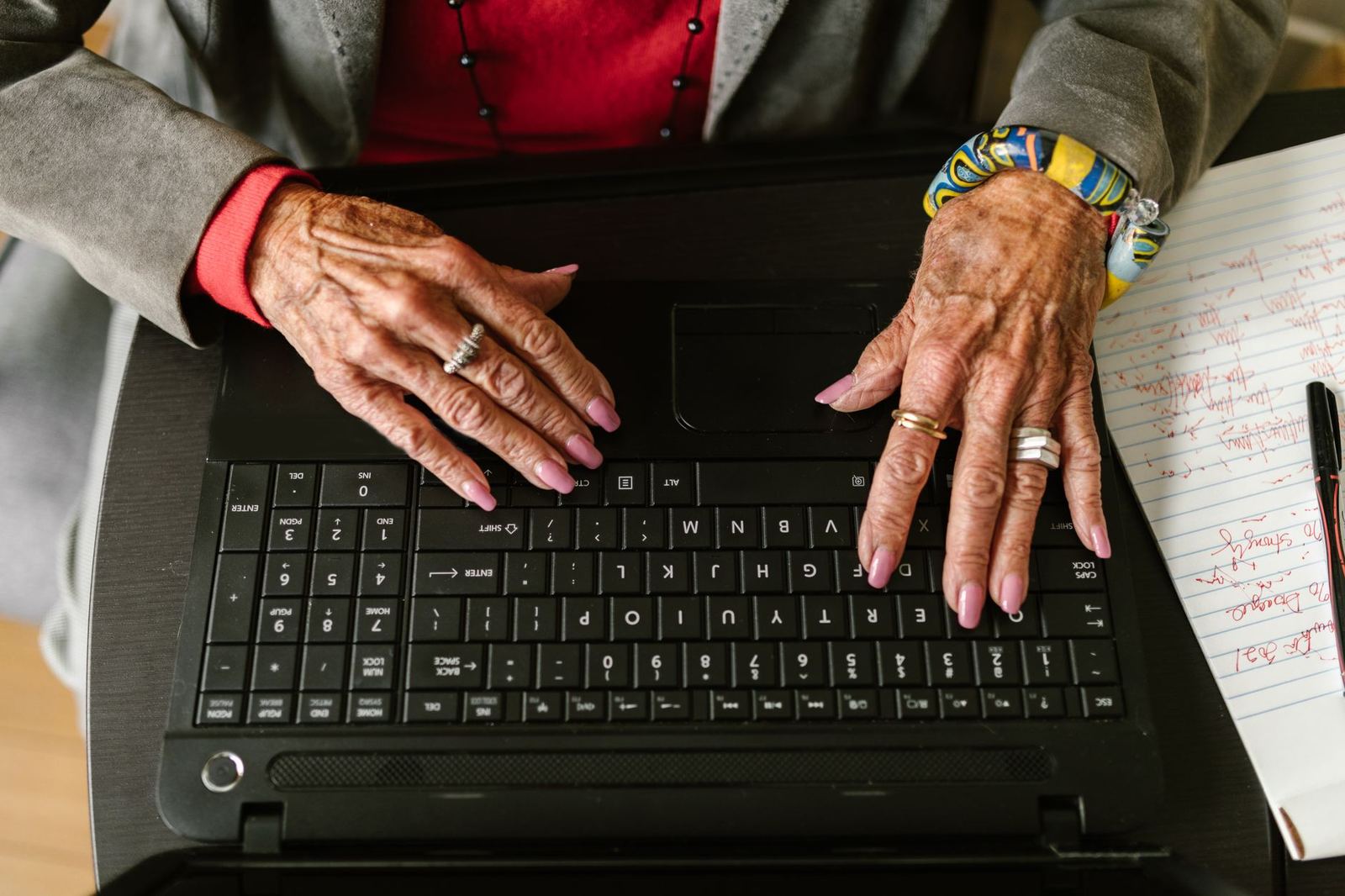
Structure may also help motivation. Research in Frontiers in Psychology, as described by GCN, found that learning motivation was the strongest predictor of lasting retention. Motivation increased significantly among students using structured formats such as Cornell notes, but showed no significant change in the digital note-taking group.
If you prefer paper, a bullet journal is one way to keep handwritten notes and tasks in a single place.
How to get more from typed notes
If you type, you can borrow what handwriters do naturally. These steps follow the findings above:
- Pause and revise. Add missing terms, details and examples instead of just re-copying what you wrote.
- Write complete ideas. A concept plus an example or supporting detail beats a bare label.
- Skip diagram copying. Put that energy into concepts and details.
- Summarise in your own words. A hand that cannot keep up forces you to listen, digest and condense, and you can imitate that on a keyboard.
- Review the next day. Review over time is where the benefit showed up most clearly.
Setting a short pause with a focus timer app is one way to protect the revision step in a busy lecture or workday.
For meetings, Popular Science suggests leaving your laptop in your bag and writing by hand, which also makes eye contact easier. If you want handwriting without paper, it points to a digital system that allows you to handwrite.
How to choose and set up your system
- Name the job. Are you capturing a lecture, a meeting, research, or building knowledge over years?
- Pick the method. Fabric pairs Cornell with lectures and study sessions where retention is the goal, and outline with meeting notes.
- Pick the tool. A notebook costs less than three dollars according to GCN; a stylus tablet or an app suits you better when you need search and sync.
- Write in your own words. Aim for complete ideas rather than fragments.
- Book a review. Put a time in your calendar to reread and condense the notes.
Keep the keyboard for moments when speed or exact words matter. GCN names legal proceedings and medical dictation as places where verbatim transcription has its place, and Popular Science quotes the paper’s point that typing trades awareness for speed (GCN, Popular Science).
Frequently asked questions
Is handwriting always better than typing?
Show answer
No. Reviews describe the advantage as real but modest, and some direct replications have not reproduced it. Popular Science’s source paper also says keyboards have their place (GCN).
Which method is best for studying?
Show answer
Cornell is the method Fabric links to retention, because the cue column lets you cover your notes and test yourself, and the summary forces processing (Fabric).
Should I copy diagrams from slides?
Show answer
In the Flanigan study, copying diagrams did not improve learning, and the write-up’s author says other studies roughly align with that. Focus on concepts and supporting details instead (Learning & the Brain).
Does a tablet and stylus count as handwriting?
Show answer
The brain-connectivity study covered by Popular Science used a stylus, which suggests the movement of writing by hand matters rather than the lack of a screen (Popular Science).
Do I need to stick to one method?
Show answer
No. Fabric notes that many people use different methods for different contexts, such as Cornell for study and outline for meetings (Fabric).