Stuck on the paper vs digital planner choice? Pick paper if you want to think and remember; pick digital if you want search and automatic saving. Research on notes leans toward handwriting, so a mix often works for you.
This page sits within the wider set of productivity tools guides on this site.
| Item | Value |
|---|---|
| Students in the Norwegian EEG handwriting study | 36 students |
| Sensors on the EEG cap | 256 sensors |
| Students in the Princeton note-taking study | 67 students |
| Verbatim overlap with the lecture, typed notes | 14.6% |
| Verbatim overlap with the lecture, handwritten notes | 8.8% |
| Class time laptop users spent on task in one observation study | 37% |
These figures come from a student newspaper’s summary of the research (The Spectator) and a psychology teaching blog (The IB Psychology Blog). Figures can change as new studies appear, so check the sources before you rely on them.
What does the research say about handwriting and memory?
Planners hold appointments and tasks, but the best evidence comes from note-taking studies. Treat it as a strong hint, not a verdict. Researchers at the Norwegian University of Science and Technology recorded brain activity in 36 students wearing a cap with 256 sensors, as summarised by The Spectator.
In its January 2024 report, PhillyVoice said brain connectivity was “far more elaborate” when students wrote by hand than when they typed. The study appeared in Frontiers in Psychology.
Older classroom studies point the same way:
- In the well-known Mueller and Oppenheimer study, 67 students from Princeton took notes on a lecture. Factual recall was equal, but laptop users did significantly worse on conceptual application questions.
- Typed notes had an average of 14.6% verbatim overlap with the lecture, while handwritten notes averaged 8.8%, according to The Spectator.
- One classroom observation found laptop users were on task only 37% of the time, the blog reports.
Why writing by hand may help you remember your plans
The explanation researchers offer is processing. Students who type tend to transcribe lectures verbatim instead of reframing the information. Writing is slower, but as KSL reports, that slowness improves the processing.
The closest study to planning came in 2021, when Umejima and colleagues asked 48 Japanese college students to record appointments from fictional dialogues. They used a paper notebook, a smartphone or a tablet, and the notebook group took less time to write yet remembered the easier questions better. Their hippocampus activity was also higher.
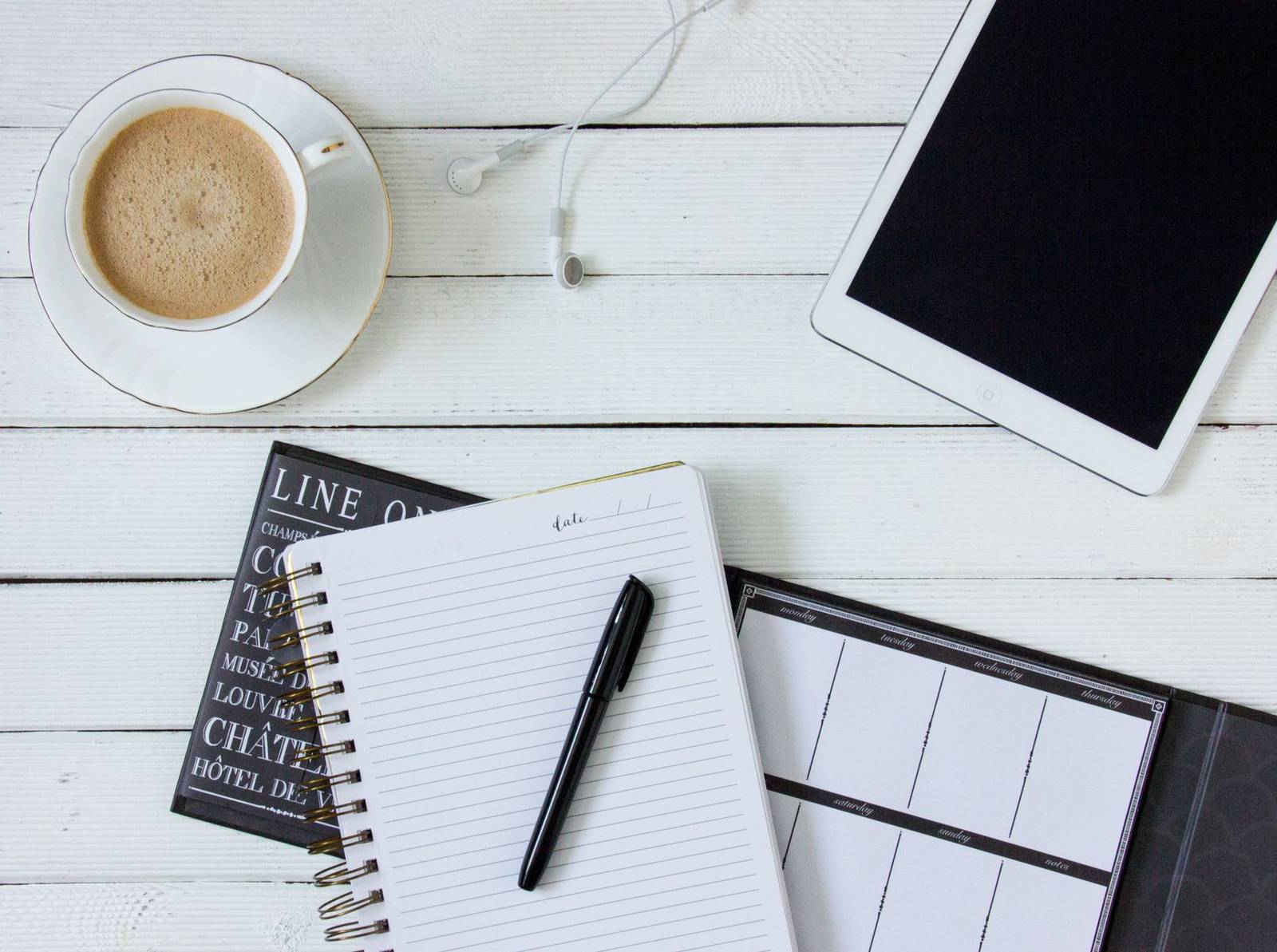
The authors suggest paper may help because it gives more concrete encoding. Information on a phone or tablet screen, they note, can be instantly erased.
Paper also lets you plan visually. Science News Explores describes key words linked by boxes and arrows and supplemented by small drawings, which suits a weekly spread well.
Where do digital planners come out ahead?
Digital tools win on retrieval and convenience. The Spectator points out that finding a detail in a handwritten notebook can be difficult, while digital files allow quick access. Handwriting also makes it easier to miss information when you need to capture something fast.
Other points in favour of digital:
- Computers automatically save your notes and keep them safe, which removes the hassle of organizing physical papers.
- A keyboard can be especially helpful for people who have trouble using their hands.
- For long writing, a keyboard may be more practical than a pen.
The main risk is distraction. Besides the 37% on-task figure above, the blog cites studies linking open browser tabs to weaker attention and memory. If your planner lives on a device full of notifications, expect some of that.
If your plan is mostly a task list, it is worth comparing the best to do list apps before you decide.
The limits of the evidence
None of these studies tested planners directly. They tested note-taking, word writing and appointment memory, so the leap to your calendar is a judgment call.
The Norwegian study also had a small sample. The Spectator notes that it may be inappropriate to extrapolate its results to the general population.
A later replication attempt argued that conclusions about a superior note-taking method are premature. The researchers behind the brain study do not call for banning devices either: they say it is important to keep up with technology, as PhillyVoice reported.
Choosing the planner that fits your week
Decide by the job your planner does most. Use these steps:
- Ask whether you mainly need to remember and think (daily priorities, goals, reflections) or to search, repeat and reschedule (meetings, deadlines, shared plans).
- Choose paper for the first, digital for the second, and test each for a full week before you commit.
- Try a hybrid: keep calendar commitments digital and write your daily priorities by hand.
- If you want handwriting on a screen, try a stylus. Science News Explores reports that a pen or digital stylus involves more of the brain than a keyboard.
If you lean toward paper, a bullet journal is a flexible way to build your own layout. The researcher Audrey van der Meer sums up the split well: “I would use a keyboard to write an essay, but I’d take notes by hand”.
Frequently asked questions
Is handwriting really better than typing for remembering?
Show answer
In the studies above, handwriting is linked to stronger conceptual understanding and richer brain activity. The samples are small and a replication attempt urged caution, so treat it as a tendency, not a guarantee.
Does a tablet with a stylus count as paper?
Show answer
It may come close. The Norwegian study had students write with a digital pen on a touch screen, and KSL quotes Scientific American saying that even a stylus and tablet is still the best way to learn.
When is a digital planner the better choice?
Show answer
Pick digital when you need quick search, automatic saving, or a keyboard because of hand difficulties. It also suits plans you change often.
Do I have to choose only one?
Show answer
No. A hybrid lets you keep shared commitments digital and use paper for thinking through priorities. Test what you actually stick with.